
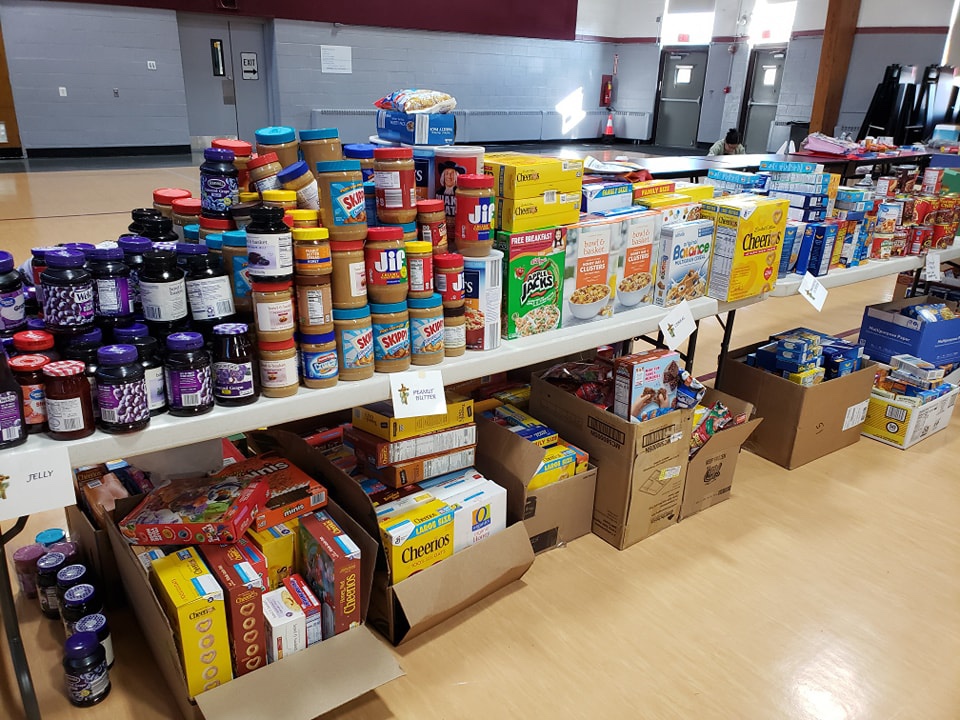
My son’s school recently organized a food drive to support our county food pantry ahead of Thanksgiving. I saw the email advertising the event right before I headed out for my weekly grocery run, and picked up a few extra cans of beans and boxes of pasta for us to donate. As I packed them in my son’s backpack the morning of the collection, he asked me, “Will this food go to homeless people, Mommy?”
I paused for a second, realizing that a nine-year-old’s view of those considered “in need” is a bit skewed. I explained that, most likely, the people who will receive the food won’t even be homeless, because more and more average families are struggling to put food on the table.
Food insecurity is one of the social causes that pulls at my heartstrings the most. As a mother, I can’t imagine being unable to feed my child. In the richest nation in the world where there is more than enough food to go around, there’s no reason why anyone should go hungry. But between food waste and unattainable grocery prices, the simple act of nourishing oneself has become a challenge — not just at the holidays, but every day of the year.
Although food insecurity seems like an insurmountable problem, there are many individuals, organizations, and businesses lending their time and talents to this worthy cause. And they seem to have unlocked the secret to success: that the best way to tackle a global problem is by working together on a local level.
Spending time volunteering at food pantries and talking to friends who organize collections have taught me some important things about the fight against food insecurity. If you’re interested in helping neighbors who face hunger, read on to learn how to best support this important cause.
Neighbors in Need
Today’s grocery prices make all of us cringe with sticker shock, so the impact of inflation has taken a toll on more families than usual. The lasting effects of Covid have also impacted all Americans. According to the latest statistics from Feeding America, the soaring unemployment and food insecurity rates since the pandemic led 49 million people to turn to food banks and community programs in 2022.
Vanessa Messina, a school administrator from New Jersey, can vouch for the increased need. Messina volunteers a great deal of her time to the St. Vincent de Paul Society at her church, Infant Jesus Parish. The Society is an international organization which provides assistance to neighbors in need, and Messina is the co-chair for her chapter’s Food Pantry and Holiday Assistance Program. Her work involves collecting food baskets at Thanksgiving, Christmas, and Easter, and organizing a Giving Tree that provides gifts to local children at Christmas.
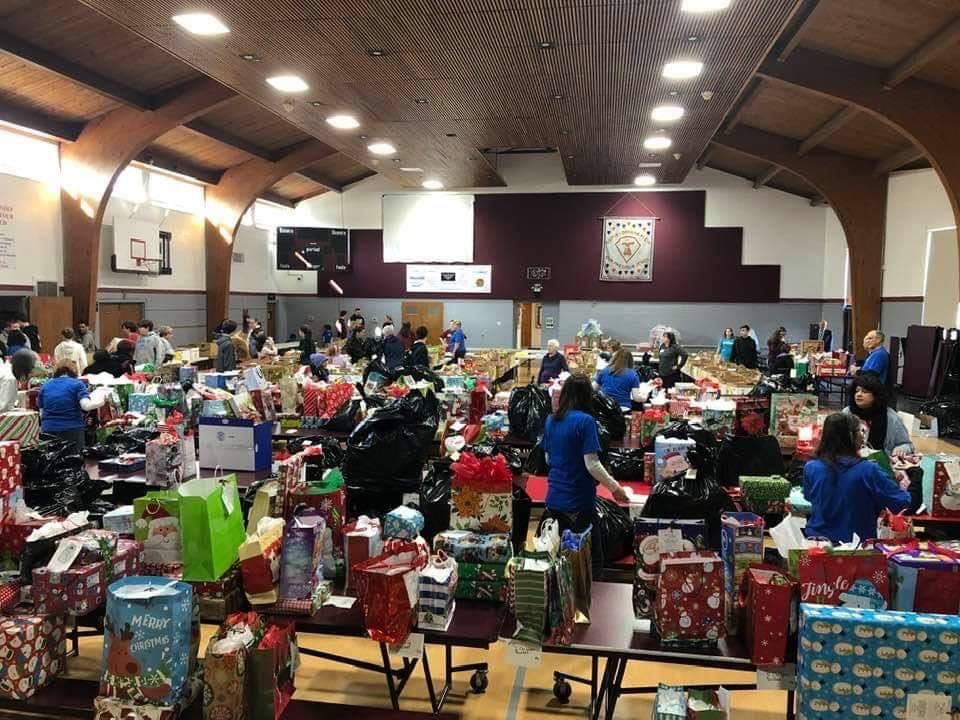

“Before Covid, we would only serve about 10 families a week,” Messina shared about her church’s food pantry. “If we had 12, it was a busy night!” But she and her co-volunteers now have to collect more to meet the demand. “We are now serving approximately 25-30 families at each of our pantry nights, held twice a month.” The organization also regularly delivers food to local families and seniors who don’t have transportation. These additional services can bring the total up to 35 families per event, a huge jump from the ten served during pre-Covid times.
My son’s assumption that food banks serve homeless people is a misconception held by many. But the fact of the matter is that we all have neighbors in need, because food insecurity affects people from all walks of life. Messina explained that various types of families rely on her church’s food pantry. “Our Neighbors in Need range from senior citizens, single person households, two-parent households, grandparents raising their grandchildren,” she shared. “We’ve seen a rise in families with children attending our food pantry, especially when school is not in session. Many families rely on the free lunch and breakfast served on a school day.” According to Messina, people often need the help of food pantries simply because of a job loss, which makes affording groceries extremely challenging. “Many of us are just one event away from being like so many of the families we serve,” she points out.
Donation Do’s and Dont’s
If you’re compelled to help your own neighbors in need, every bit of generosity helps in the fight against food insecurity. But considering certain things before donating makes the operations at food pantries run more smoothly.
When choosing items to donate, do consider foods that are easy, nutritious, and shelf-stable. Boxed meal kits are great because many require only the addition of water or few other ingredients, which may be scarce to the people receiving them. “We try to keep it as simple as we can,” Messina reminds.
Don’t donate anything that is expired, or damaged packages like dented cans and ripped boxes. As a rule, if you wouldn’t eat it, others shouldn’t eat it either.
If possible, don’t donate glass containers. “We are very careful when packing the grocery bags, but we can avoid spills if all items are plastic or canned,” Messina notes.
Do include food items that are non-essential but welcome additions. “We get requests for things like coffee or tea,” Messina shared. “It’s always nice when we can include that with our bagged groceries.”
Don’t forget necessities that are not as obvious, but do check with your collection center to make sure they’ll accept them. Baby food is an essential, and it’s shelf-stable, and some food banks accept baby formula, too. Personal products like soap, shampoo, diapers, and feminine products are valuable donations, but check with your local food pantry first, as some accept these things while others may direct you to another organization in your community. Messina is always appreciative to receive these donations at her organization. “Feminine products and toilet paper are two of the most requested products,” she says. “When we think of it, if a family is struggling to put food on the table, these other items are pushed to the side. Food on the table or shampoo? It’s a sad choice that many of our families face.”
Food Pantries’ Most-Needed Items
Messina and others who volunteer at food pantries share that the items in highest demand are those that are easy to prepare, sustaining, and can be stretched the furthest. Some of these include:
- Meal kits — Boxed dinner kits offer more of a complete meal with less additional ingredients. Microwavable mac and cheese or items like Chef Boyardee also offer pre-cooked convenience.
- Pasta and pasta sauce — Pasta has a long shelf life and is a highly sustaining food with a mixture of carbohydrates and — surprisingly to some — even protein. Pasta is a great staple for big families since it expands when it cooks!
- Shelf-stable protein — Canned tuna or chicken offer non-perishable protein options.
- Pancake mix — Pancakes are a warm treat for anyone, and a family can turn one box into plenty of breakfasts. Many require eggs and milk, but don’t turn your nose up to the “shake and pour” varieties that only require water! They’re super convenient and will fill many happy bellies.
- Peanut butter and jelly — this classic combo makes for a super sustaining sandwich and a little goes a long way.
- Canned beans and vegetables — Adding veggies to meals is challenging when fresh or frozen produce can’t be collected at a food pantry. So donate as many canned beans and veggies as you can! They have an ultra-long shelf life and are packed with vitamins.
- Cans and boxes of soup — Soup is filling and warm in the cold winter months, and cans or boxes have a long shelf life. Many have pop-top openings which make them even easier to open and heat.
- Bagged rice and pasta side dishes — These hearty side dishes are often prepared with only water.
- Fruit in cans/plastic cups — Canned fruit and little plastic cups of things like peaches and applesauce are the perfect snack for kids or addition to any meal to round out the food groups on one’s plate.
- Granola bars — Granola bars and energy bars are a well-balanced snack that can often double as a small meal replacement. Brands with less sugar and balanced carbohydrates/protein are sustaining snacks, especially for kids.
- Shelf-stable milk — Milk is a necessary ingredient in many recipes, and also a “part of this complete breakfast!” But since it’s perishable — and expensive — it’s not always something people receive from food pantries. Shelf-stable varieties of cows’ milk and plant-based milks come in boxes and don’t require refrigeration until opening, which make them great additions to any food donation.
- Cereal — Anyone who’s ever been too tired to make dinner knows that a bowl of cereal is a satisfying meal at any time of day! Cereal is a healthy addition to food pantries because it comes fortified with plenty of vitamins and minerals.
- Oils — Cooking oil, particularly olive oil, is often expensive, but is a necessary staple to prepare many meals.
- Non-food personal products — Things like detergent, soap, shampoo, toilet paper, toothpaste, and feminine products are expensive but necessary self-care items that some pantries gladly accept.
Community Partners
While individual giving is crucial to combating food insecurity, a large responsibility must fall on restaurants and food suppliers. When eateries discard their daily leftovers they contribute to food waste, but when they donate their surplus to organizations they directly help food insecurity in their community. You can feel good patronizing chains like Panera, Chick-fil-A, and Whole Foods, many of which donate their unused food to local organizations at the end of the day.
If your nonprofit is in need of food donations, consider approaching your local grocery stores and restaurants to see if they would be willing to donate their excess food. (Be prepared to pick it up, as most restaurants expect the organizations to do this themselves.) To find out how to partner with some of these chains in your community, visit the charitable giving portions of their websites:
Food and the Future
Between a tough economy and ever-rising food prices, food insecurity continues to be an unfortunate reality everywhere that challenges the resources of communities. “While the need for food has grown with the increased number of visitors to our pantry, our incoming donations have not been able to keep up with the demand,” Messina shared. “My hope is that one day, we never have to refer someone to another agency and that we can help all who call us.”
The topic of food insecurity is unsettling, but researching it reveals a positive reminder of the power organizations, businesses, and individuals have when they work together on a local level for the good of their community. “I’m grateful to be a part of a group that can help so many in our community… a group that doesn’t judge, but listens to those who call us,” Messina reflects. “Sometimes, a person just needs a kind word and a smile to let them know it’s going to be okay. It’s the best part of this work!”
 What Lara Wrote
One thought