
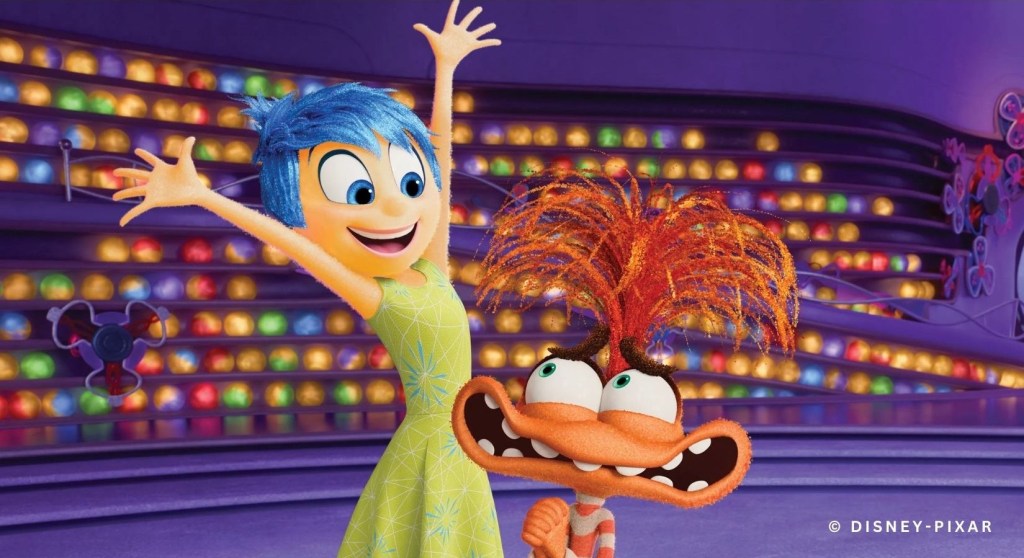
Creating a summer blockbuster is no small feat. Years of work have to result in a product that pleases a large majority of people — audiences as well as critics, adults as well as vacationing schoolchildren. While the box office often celebrates the loudest action movie or the latest installment of a superhero saga, this summer an animated feature based on raw emotion and relatable life experiences stole the show. And its universal appeal continues to fuel its success.
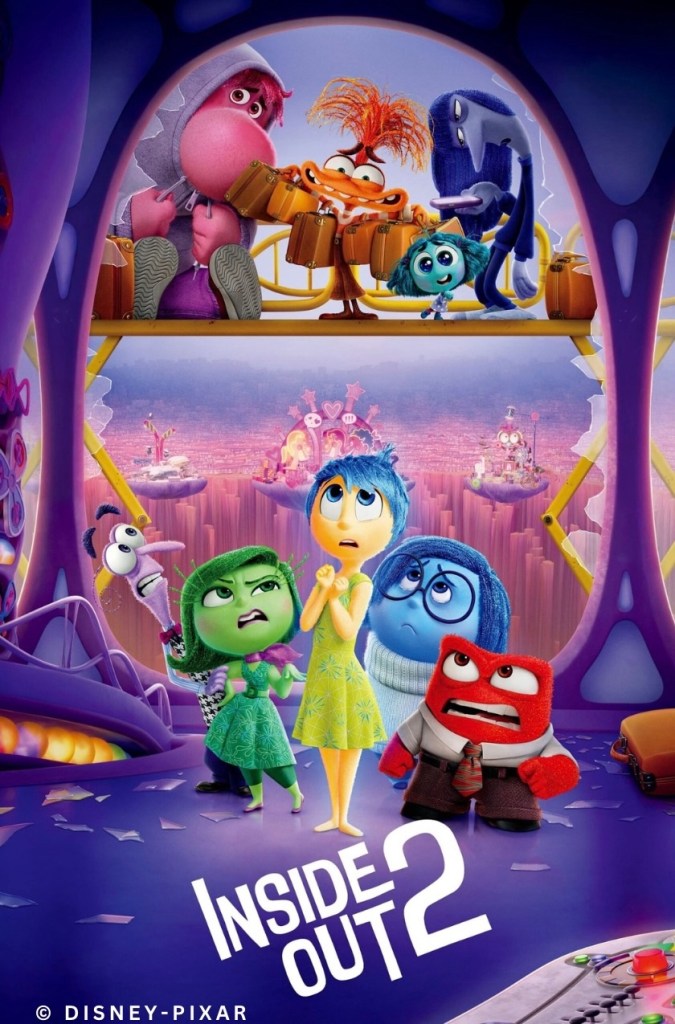
Inside Out 2 was released by Pixar Animation Studios on June 14 to record-breaking earnings. A sequel to the studio’s 2015 hit Inside Out, Inside Out 2 follows now-teenage Riley as she and her anthropomorphized emotions navigate the new experiences of puberty and adolescence. Audiences around the world gladly ditched their streaming dependence and rushed to theatres for the movie that set the box office — and social media — on fire. Since its release, Inside Out 2 has made a staggering $1.6 billion worldwide and is the biggest movie of 2024. It has also surpassed its Disney cousin Frozen 2 to become the highest-grossing animated movie of all time.
That’s quite an impressive resume. But there have been many excellent animated films. Some of them even have viral singalong soundtracks. So what exactly is it about this film that has taken the world by storm?
Perhaps its draw is in Pixar’s reputation for telling relatable stories in a deeply emotional way. Inside Out 2 is both entertaining and poignant. It taps into the universality of our human experience in such a meticulous way that aspects of the story would resonate with viewers of any age. By turning abstract emotions into physical characters with personalities of their own, the big psychological concepts in this film are slightly more tangible for young kids. For teens and adults with a deeper understanding of their emotions, the movie helps make sense out of familiar experiences we often can’t put into words.
As a children’s mental health therapist, I found Inside Out 2 particularly meaningful. I spent 15 years working with teenage girls (and as an added qualification — I used to be one.) I know first-hand how complicated it is to feel your way through the emotions of life in a world that doesn’t want to talk about mental health. When I started in the field in 2002, it wasn’t always easy to find tools or examples from mainstream media that could support my practice. Without that kind of validation, it often felt like awareness campaigns and efforts to create more psycho-education fell on deaf ears. So you can imagine how excited I was to see the global mental health conversations sparked by Inside Out 2.
Added to that excitement was the recent opportunity I had to chat with Meg LeFauve, the brilliant screenwriter behind Inside Out 2. Meg, along with her co-writer Dave Holstein, director Kelsey Mann, and a team of other insightful creatives, breathed life into these relatable characters that have touched audiences around the world. As a writer, I could not have been more honored to connect with such an accomplished storyteller as Meg. (It was my own Valentina Ortiz moment, if you will.)

No stranger to Pixar, Meg also co-wrote the script for the first Inside Out (which earned her an Academy Award nomination for Best Original Screenplay) and The Good Dinosaur (which was nominated for a Golden Globe.) Her long list of accomplishments makes her the perfect sage for budding screenwriters, who turn to her podcast The Screenwriting Life for inspiration.
The positive impact of Meg’s work on the Inside Out films is incredible. It has contributed to the movement of normalizing mental health, and proven that art can be not only entertaining but also have the power to do some good. “It’s an amazing experience to work for years on a story — led by an incredible director with an incredible team — and have it ripple out into the world the way this film has,” she told me. “Both with the first Inside Out film and this one, the absolute best is the way the film is opening conversations — between parents and their kids, between friends and family — between adults!”
To ensure that the adults who made this film understood the present-day teens it portrayed, Meg and her team worked with a focus group that went by a special name. “Riley’s Crew was a group of teenage girls who acted as consultants on the film,” she explained. “They were very valuable to the process — to help us know that what we were delving into was still relative to this generation, that we were being authentic to their experience.”
While Inside Out 2 focuses on a teen’s experiences, it is truly a relatable film for all ages, since emotional growth is lifelong. Even adults question our sense of self, struggle with self-love, and continuously evolve, much like the way Riley and Joy and all the emotions evolved in this film. “Our intention was to tell the best possible story — and that means it reaches everyone, because we are talking about [what] it means to be human,” Meg explained. “We were honest about our own experiences both at the time we were teenagers and as parents — drawing from our vulnerabilities.”
Mental health has a starring role in this film through the significance of memories, the development of Riley’s self-awareness, and the arrival of her new emotions: Anxiety, Ennui, Embarrassment, and Envy. While many children younger than Riley feel these feelings, adolescence is often the time when our awareness of them becomes heightened, and the way they were portrayed in this film was incredibly relatable. The character of “Anxiety” has become a bit of a pop culture icon since the movie’s release, undoubtedly due to the vast number of people who identify with it. She is perfectly depicted as a bit mischievous but lovable — the irony of which is not lost on anyone who’s experienced this protective emotion. As a compulsive list-maker myself, Anxiety’s checklists and plans were so familiar I had to chuckle, while I teared up at the vulnerability she felt when her over-planning hurt Riley. The way the artists (literally) illustrated Riley’s panic attack was superb, and the other emotions’ fight to help her out of Anxiety’s grip was true to life.
Meg and her colleagues are behind the strong connection that so many of us have felt to this movie. “I think every part of the film is coming from the experience of the team — the director first and foremost, and the writers, and the artists and editor. We are all putting our hearts and souls into the story,” she said. In fact, Meg’s own experience with anxiety was a strong inspiration for this movie. “Very often we’d talk about our own lives — for instance I have been asking my anxiety to ‘take a seat and watch’ for decades,” she shared. “I knew my anxiety took over my imagination for [Riley’s] projections. I wasn’t a hockey player but I was a dancer and understood the complexity of girl friendships around a goal or team.” Looking back on her own youth, Meg knows what she would tell her younger self if she had the chance. “I’d tell my younger self that the anxiety I was feeling so strongly was natural and, for me, was coming on so strongly because I am an artist and storyteller,” Meg shared. “My younger self didn’t have an outlet for all that energy and so Anxiety used it (and still does) to make up worst case scenarios.” But like me, Meg finds healing in writing. “Once I start writing, that anxiety alarm goes down.”
If you’re a parent who related to the emotions’ desire to protect Riley in this film, that’s no coincidence either. Meg explained, “I’m a parent who wants the best for her kid but [like Joy] makes mistakes like, ‘Let’s just not think about that! Let’s be happy!’ and shoving stuff to the back of our mind.”
As I watched the film, I connected to the idea of Riley’s inner control panel. It made sense out of something I can’t see but do feel: Anxiety controlling my buttons when I’m meeting deadlines, Sadness holding a button down as I’ve mourned the recent loss of my mother, and Joy always reaching for the button to pull me back up. We’re conditioned to believe that certain emotions are “good” and others are “bad,” but Inside Out 2 beautifully suggests that all of them are important to our makeup. What’s a more brilliant depiction of this than Joy sitting Anxiety down in a comfy chair and gently pouring her a cup of Anxi-tea?
Perhaps therein lies the secret to our emotions’ purpose — that they work symbiotically which is necessary for our growth. “Each emotion is there for Riley — it’s just the way they go about protecting her that can go off the rails,” Meg explained. “At first we tried having Anxiety as a monster — she came into headquarters disguised as a monster and was unmasked. But it didn’t feel right — honest — to our own anxiety who was just trying to protect us.”
The lessons in this film are more evidence that it’s made for every viewer of every age. “So often we are told to judge our emotions,” Meg explained. “Envy is a great example: being jealous is not a bad thing — it is telling us what we want — and that is very important for women in particular who aren’t taught to want but to serve everyone else’s wants. We don’t have to act on that jealousy or twist it into feeling a lack — we can notice it and say, ‘Hey, what do I want here that this person has, what longing in me is rising?’ That’s so important to know.”
There were so many poignant moments for me in this film, from the way Riley wanted Joy but felt controlled by Anxiety, to the bittersweet line which LeFauve credits her co-writer Dave Holstein for: “Maybe this is what happens when you grow up… you feel less joy.” Apparently, even those who worked on the film were moved by its outcome. “For me personally, the most emotional moment is when the team inside hugs the sense of self — the self that is the best of Riley and the parts that have been ignored or excluded,” Meg explained.
Of course, what Pixar does best is to balance the heavy with the humorous, and Inside Out 2 is no exception. Funny moments include Joy’s spectacular G-rated exclamations like “Jiminy mother lovin’ toaster strudel,” and the two-dimensional pre-school television characters “Bloofy and Pouchy,” that delighted my tween son who is now way too cool for educational cartoons that break the fourth wall. “My favorite funny moments are The Vault scene (all of it makes me so delighted!) and the moment towards the end when Anger grabs Pouchy and just digs around to find what he needs,” LeFauve told me. “When our Head of Story John Hoffman came up with that in our story room we were crying laughing and on the floor.”
Inside Out 2 is a film for anyone who is growing up or has already grown. It’s an ode to all the emotions that make up our whole sense of self. As inspired as I was by this film, I’m equally inspired by Meg LeFauve. Such kindness, vulnerability, and humility in someone so accomplished is truly refreshing, and the success of this movie speaks to the brilliance of its creative team.
Maybe what the world needs is less outward focus and more inward focus. More stories that touch our souls. More entertainment that — instead of divides us — connects us by illustrating how similar our journeys actually are. Inside Out 2 is an artistic masterpiece that teaches us to look within and practice self-care, even if that means sitting our emotions down from time to time when they need a break. This film is a summer blockbuster to remember, and I’m inspired by what it’s given us — healthy conversations, lovable characters, and the ageless reminder to nurture ourselves more consciously.
 What Lara Wrote