

We’re all guilty of it.
At some point in our lives, every one of us has undoubtedly held some sort of ageist beliefs. It’s not surprising, since generalizing people based on their age is arguably the least challenged prejudice to still exist in our society. ”Boomers are narrow-minded,” “Gen Zs are lazy…” the list of stereotypes is long and hard to escape. But when the majority of a population is negatively affected by this type of prejudice, we should all be concerned about the harm it can cause.
The World Health Organization defines ageism as “stereotypes (how we think), prejudice (how we feel) and discrimination (how we act) towards others or oneself based on age.” The definition of ageism technically applies to the discrimination of any age group, but when Dr. Robert Butler coined the term in 1968, he was referring to our society’s systematic discrimination of older people.
The U.S. Census Bureau projects that by 2030, children will be outnumbered by older people for the first time in U.S. history. WHO supports those findings by projecting that in the next 30 years, the percentage of the world’s 60+ population will jump from 12% to 22%. The facts are clear — older people have a strong and growing presence in our world.
People living longer and the population of older people rising should be encouraging (newsflash: this is good.) So it’s curious why ageism continues to be an issue. Are we afraid of aging? Do we believe that youth is superior? It’s hard to ignore the fact that every facet of our culture sends us messages which support that idea. Cosmetic companies constantly remind us that wrinkles are “bad,” greeting card makers consider 50 “over the hill,” and leading ladies and men on the silver screen are rarely sliver-haired. It’s easy to be influenced by these pervasive messages that contradict the very gift of a long life.
Recently more efforts have been made to raise awareness about discrimination based on race and gender, but ageism still receives far less attention. Combating ageism should not just be the responsibility of older people. Ageism affects everyone — from families to communities to society as a whole, all of which benefit from better care and the past and present contributions of older people. On a more individual basis, the reason we should all care about fighting ageism is quite simple: someday you may be that older person whose life is negatively affected by it.
Respect for Reality
I still remember an encounter I had with a stranger years ago while grocery shopping with my grandmother. “Aww she’s so cute,” the woman said to me about my Grandma, who was standing right in front of her. “How old is she?” I wondered if I should respond the way people do about toddlers: “Thanks, she’s almost 1,140 months.” This was one of my first experiences as a young person feeling uncomfortable about ageist behavior. I knew this woman wasn’t trying to be rude, but her unconscious bias illustrates the kind of ageism that infantilizes instead of respects older people.
Of course, there’s no such thing as a cookie cutter older person. Some people like my Grandma have better health and energy in their nineties than people in their sixties, while other people begin to experience a significant decline in their capacities much earlier on. Being against ageism doesn’t deny reality. Aging indeed causes change. There are inevitable declines in health and abilities, as well as emotional stressors — such as loss and loneliness — that weren’t present earlier in life. But we can accept the reality of aging while not accepting the discrimination aging often brings.
Ashton Applewhite, an anti-ageism activist and the author of “This Chair Rocks: A Manifesto Against Ageism,” maintains that ageism is a major stressor of the aging journey. “Obviously aging isn’t ‘just a mindset,’ but it’s increasingly apparent that attitudes are an important part of the equation,” she writes. “Age stereotypes become more relevant as we get older — and thus more likely to become self-fulfilling prophecies.“
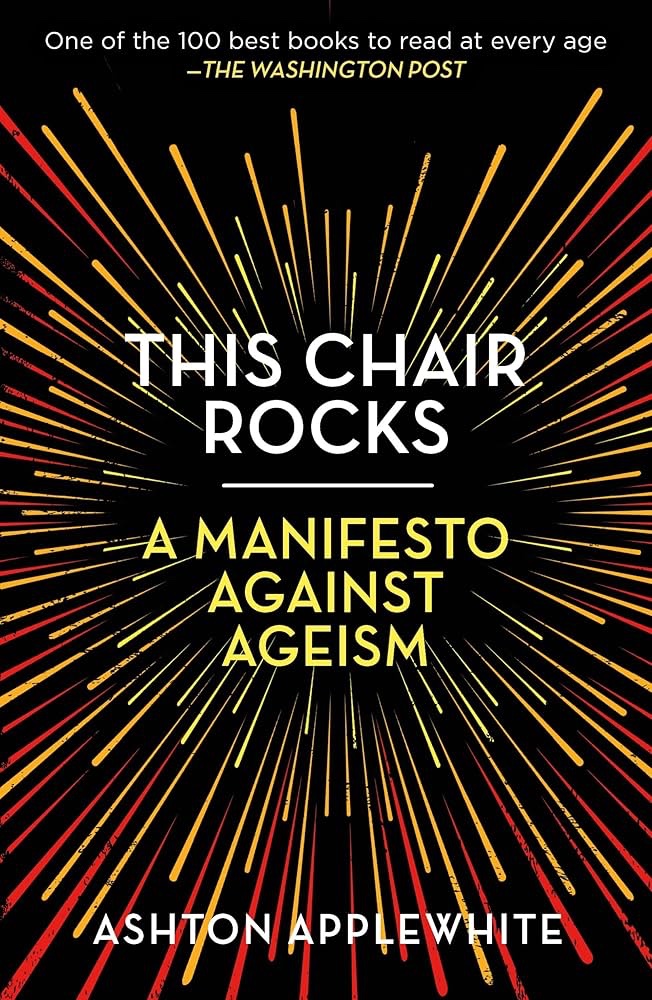
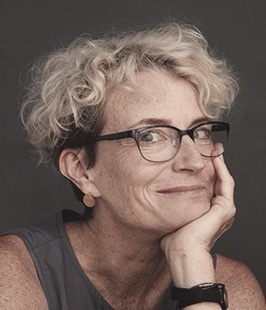
While it’s natural to want to live long, healthy lives, Applewhite points out that society is to blame for making the process of getting older scary. “Fear of dying is human; fear of aging is cultural,” she says. She is passionate about fighting ageism and encouraging her peers to resist it in their own lives. As the medical field has finally acknowledged the connection between health and mental health, she stresses how harmful it can be to have an ageist perspective of one’s own life. “The way we internalize cues in the environment — as abstract as the way older people are depicted in the media or as concrete as that emerging bald spot — significantly affects our physical and psychological trajectories.”
Though aging is a natural stage of life, it is typically seen as a negative in Western culture. Many Eastern cultures are known for revering their elderly, due to Confucian values that respect older people and value their wisdom and life experience. Americans’ unhealthy obsession with work might be part of the reason we can’t accept this stage of life, since we equate aging with an end of productivity.
In the Workplace
In a recent survey of employers, the nonprofit research foundation Transamerica Institute asked the question: At what age is a person too old to hire? The study found that 35% of employers believed age 62 is too old to be hired. Even as a professional in my forties, I question whether I’m judged more by my strong experience or the not-so-recent graduation dates on my resume. The workplace has always been one of the most prominent places for ageism to occur, but it’s arguably gotten worse in recent years.
As all industries increase their use of digital operations, assumptions about older people’s technological knowledge can greatly result in ageist treatment. I often think about the prejudice my father must unknowingly experience. As an accomplished attorney who is now eighty, he still runs his own law firm and wins high-profile cases that involve lawyers and judges decades younger than he is. He tells people to call him instead of texting because he proudly does not own a smart phone, and his resistance to Zoom calls has led to jokes about him being a stubborn senior. In reality, none of this disqualifies him from being one of the best in his field, but his position in a youth-dominated profession undoubtedly brings him prejudice.
The job market has become far less individualized now that remote employment enables hiring managers to select candidates on a bullet list of criteria rather than experience and personal impressions. Being a “seasoned professional” is often not as revered as being a young millennial who matches a demographic. Instead of managers and CEOs personally reviewing resumes, computers and young HR employees are now in charge of this important task, often leading to candidates with recent graduation dates (and less experience) landing jobs and pushing out older candidates. Workplace ageism presents a serious impact on individuals, families, and communities, as it can lead to crippling economic and mental health problems.
Effects on Healthcare
While all areas of life can be negatively affected by ageism, healthcare is arguably the most serious. Recently witnessing how it affected my mother’s life was the single most influential factor that led to my own awareness and advocacy efforts.
My mother lived to be eighty years old, but always looked at least twenty years younger than she actually was. She was strikingly beautiful, had the most elegant fashion sense, and never had a hair out of place. Her appearance and mental sharpness defied her age, and everyone told me how much younger she seemed. I never saw her as “an old lady,” and since she didn’t look or act “old,” I never imagined others saw her that way either. So I was shocked when she told me about the ageism she experienced in routine doctor’s visits. Receptionists who had seen her age on her chart would loudly and slowly say condescending things to her like, “Do you think you can fill out this form for me?” Medical assistants who were young enough to be her grandchildren called her “Honey” and “Sweetie.” I was furious when she told me this was happening, since I had no idea how ageist strangers were being to my mother. She told me that it upset her, which led to her questioning her own age and value. She confessed she never spoke up for herself when it happened, which made me regret not having accompanied her on appointments to give these people a piece of my mind.
By affecting her view of herself, this ageist treatment directly impacted my mother’s mental health. But it was the ageism she encountered in a hospital setting that I believe had fatal consequences. We now know that the cancer that suddenly took her life had been previously ignored by a rushed, insensitive doctor, while younger patients in the same department were given the most thorough care. And when the treatment my mother eventually received was too late, hospital workers seemed to dismiss her — along with all the older people on that floor. Nurses tended to her with very little urgency, doctors rushed through their exams, and social workers and physician assistants talked about her instead of to her, as if she was not even conscious. It’s worth noting that all of this ageist treatment occurred in what is ranked as one of America’s “top hospitals.”
When the medical field dismisses instead of honors older people, the consequences are dire. Certainly, our healthcare system has in general turned into an impersonal business of billing codes instead of humanity. But I’ve seen young people in the same high-risk health groups being treated differently and with more respect. Ageism views older people as dispensable instead of as the whole humans they are: people who have made and continue to make valuable contributions to society; people who have fragile mental health that can be easily triggered by ageist treatment; people with angry loved ones like me.
Since ageist attitudes can affect the most crucial areas of life, more needs to be done to address the unconscious bias and lack of mental health awareness of medical professionals and hospital workers. As a social worker myself, I know how little attention is given to geriatrics even in a field as progressive as social work. To hold a license where I practice, social workers are required to periodically complete awareness training in certain areas — but aging is not one of them. And across all areas of psychotherapy, many clinicians specialize in all ages groups but geriatrics. Therapists, doctors, nurses, and hospital workers need better training to increase awareness and address the effects of unconscious bias. Since dismissal is a form of ageism, healthcare professionals must also be better trained to spot and intervene in older patients’ mental health needs.
Ageism and Mental Health
Michael Friedman, LMSW is a retired social worker with a specialization in geriatric mental health. Among his many professional roles, Friedman taught at Columbia University (where he was one of my professors,) and he is also the honorary chair of the Geriatric Mental Health Alliance of New York, which he co-founded in 2004.
In the twenty years since then — and with the aging population rising — Friedman says we still aren’t truly ready to serve the mental health needs of older people. “Despite decades of demographic and epidemiological warnings and some efforts to respond, America is still not adequately prepared to meet the challenges of supporting mental well-being in older adults,” Friedman said. “Current services are dysfunctionally fragmented. . .People with cognitive impairment living in the community have a range of unmet needs including neuropsychiatric behavior management and caregiver support.”
This lack of attention to older people’s mental health needs is partially driven by ageism, and raising awareness of these shortfalls can lead to better treatment. In his article Time to Confront the Challenges of an Aging America, Friedman suggests that the top goals to meet the mental health needs of older people include improving long term care (ie, nursing homes and assisted living facilities,) increasing cognitive and behavioral mental health service capacity, and expanding access to mental health care. Any such efforts, of course, rely on people of all ages demanding action.
Strategies for Solutions


It’s clear that ageism is a significant problem, but research tells us there are several effective ways to improve it. Certain steps can lead to more people of all ages recognizing ageism, feeling compelled to fight it, and working together to strategize solutions. Here are five key ways to combat ageism on a micro and macro level:
- Raise Awareness: Too few people are conscious of all the areas of life ageism affects. Unfortunately, those who are not directly affected by it or don’t have older people close to them are often unaware that ageism even exists — or what a far-reaching problem it is. Raising awareness is the first step in combating it — and that’s up to all of us, no matter your age. If you witness or experience ageism, speak up about it. If you notice your own bias, work on it. If your friends or family are affected by ageism, help advocate for them. Each of these actions moves us one step closer to more people becoming ageism-aware.
- Promote Positive Aging: Part of raising awareness is promoting positive aging. As mentioned earlier, aging indeed presents its share of physical and emotional challenges. But making small efforts in lifestyle can improve those, and even help many people enjoy a better quality of life in their old age. Encourage older people around you to do things that are good for their physical and mental health, whether it’s taking a short walk or spending time attending a favorite social activity.
- Make Aging a Cultural Norm: While we may not have immediate control over how aging is portrayed in society, we can play a role in it. Some companies have recently made efforts to normalize aging, and it’s been met with a lot of positive reception. From clothing brands featuring grey-haired models to networks airing shows like The Golden Bachelor, normalized aging is being introduced to customers and audiences of all ages. And our feedback matters! Let businesses know that we like more age representation, and speak up if you’ve noticed ageist behavior — on as big a scale as how people are portrayed in a movie or as small a scale as the way someone is treated at your local coffee shop.
- Encourage Multi-generational Interaction: Studies have found that one of the biggest antidotes to ageism is bringing different generations together to close the divide. When you think about it, it’s a great explanation for the basis of ageism: if we don’t interact with people from different generations, it’s easy to ignore their experiences. Think about the multi-generational interaction in your own life or community. If you or your kids have elders around, spend time together to build sensitivity to each other. If you don’t have older people in your life, volunteer to gain exposure to people of a different age than you. I recently met a high school student who started a community garden at her church for this very purpose. The vegetable garden will grow food for people in need, and the project will be run by local teens and senior citizens. Two generations working together toward a common good and building an anti-ageism bridge at the same time — brilliant!
- Demand Better Healthcare Training: As mentioned earlier, the effects of ageism on healthcare are the most devastating, and need immediate action. On a small scale, we can all speak up against ageism if we see it happening in a healthcare setting, and we can also demand different providers if we are not satisfied with those treating us or our loved ones. On a bigger scale, we can demand better training from various professional boards, and lobby for legislation or regulations that mandate specific training standards for healthcare workers at the local or state level.
Collective Efforts
At the time of this writing, I fall in a strange “middle” generation. As a forty-something, I’m sandwiched right between the kids and the senior citizens in my family. I’m thankful for that, because it’s a reminder of where I’ve been as well as where I’m headed. In my research and advocacy efforts, the biggest thing I’ve learned is how vital inter-generational efforts are in combating ageism. The most powerful tool we have is truly each other.
This stage of my life has opened my eyes to ageism more than ever before. I’ve become angry as I’ve seen ageism affect my parents, and wary as I think about experiencing it myself in the upcoming years. But I am hopeful, too. I’m hopeful that more people like me will recognize that we don’t need to accept ageism as a part of life — that it doesn’t have to be the one “-ism” nobody cares about. I believe that talking about it — like I’m doing here — will get people’s wheels turning. Maybe we can’t erase every prejudice from every mind. But we can all work together to improve the lives of the older people of today and tomorrow.
And that’s a win for everyone’s future.
 What Lara Wrote